With the rapid growth of electric vehicles, consumer electronics and energy storage industries, large quantities of spent lithium-ion batteries are generated worldwide. The black mass (black powder) from waste lithium batteries contains high-value metals including lithium, cobalt, nickel and manganese. Efficient recovery of these metals can ease the shortage of battery raw materials, prevent heavy metal contamination of soil and water, and form a closed-loop circular economy for lithium-ion batteries.
A complete recycling process for black mass consists of four main stages: pre-treatment, leaching, separation & purification, and refining.
1. Pre-treatment of Black Mass
Pre-treatment aims to remove impurities and adjust particle size, improving the reaction efficiency of subsequent metallurgical processes.
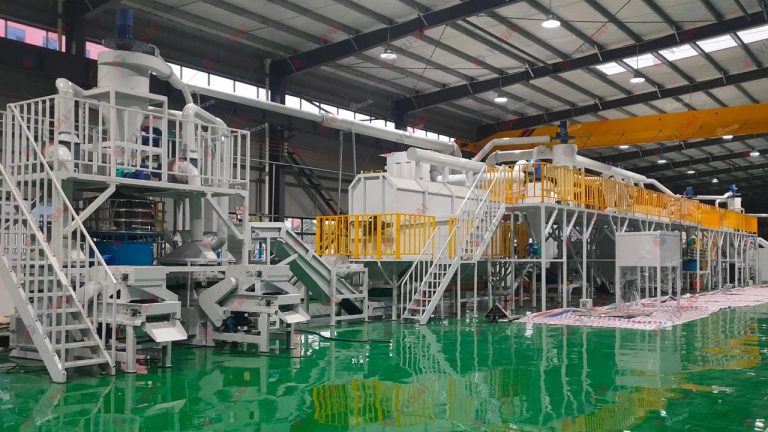
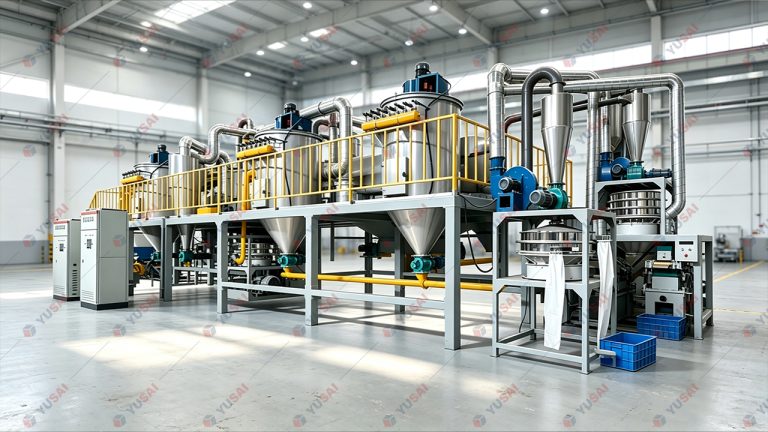
- Magnetic Separation: Magnetic separators remove ferromagnetic impurities mixed in black mass. Iron contaminants are separated out to avoid interference, equipment wear and side reactions in follow-up chemical processes.
- Screening & Air Classification: Materials are graded by particle size through vibrating screens. Air classification separates light and heavy fractions based on different particle suspension speeds, preliminarily enriching valuable cathode materials and lowering impurity levels.
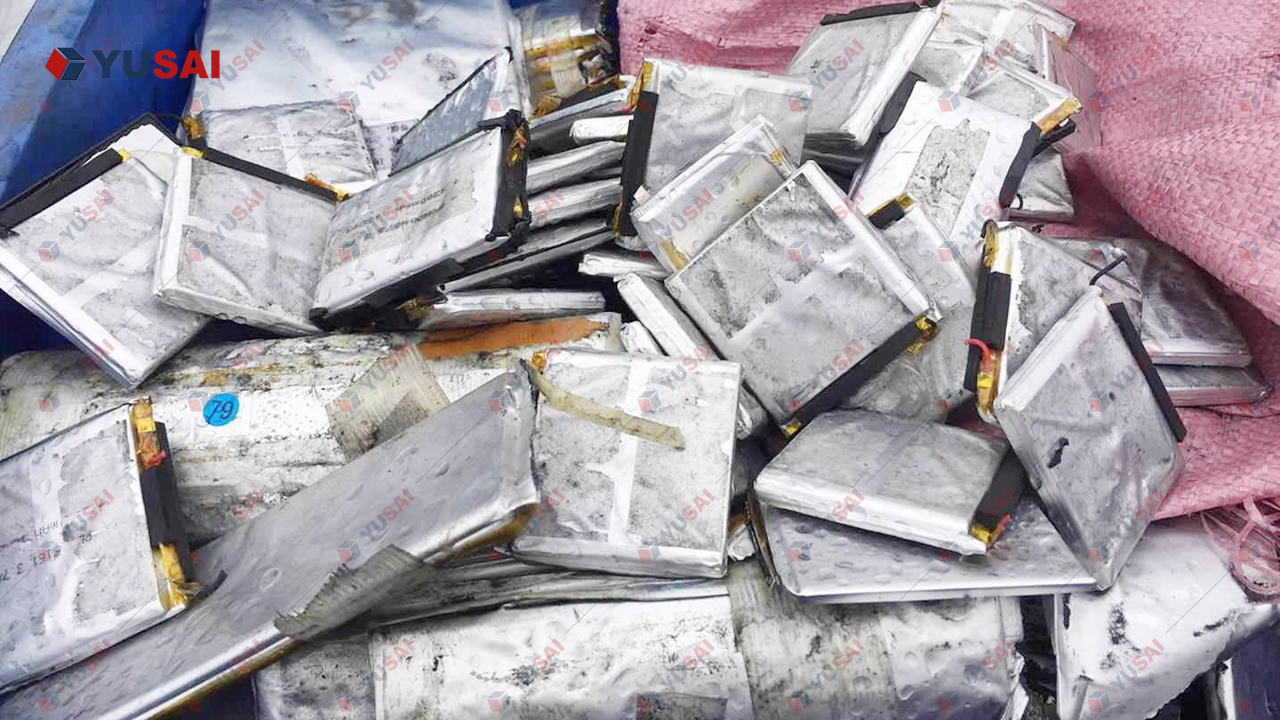
- Shredding and Crushing: Waste batteries are first disassembled to separate casings and electrode components. Electrode materials are crushed into fine particles to increase reaction contact area for higher leaching efficiency.
2. Leaching: Dissolve Valuable Metals
Leaching transfers solid metal elements into aqueous solution, serving as the key transition step for metal separation.
Acid Leaching
Sulfuric acid, hydrochloric acid or nitric acid are commonly used leaching agents. Under heating and stirring, lithium, cobalt, nickel and manganese react with acid and dissolve into the leachate.
- Advantages: High metal leaching rate, mature and stable industrial process.
- Notes: Acidic wastewater must be treated before discharge.
Alkali Leaching
Alkali solution is mainly used to remove amphoteric metals such as residual aluminum. Aluminum dissolves preferentially in alkaline conditions and is separated from cobalt, nickel and lithium solids.
- Advantages: Less corrosion to equipment.
- Limitations: Mostly used as an auxiliary pre-leaching procedure rather than the main dissolution method.
3. Separation & Purification of Leachate
The leachate is a mixed solution containing lithium, cobalt, nickel, manganese and other impurity ions. The following technologies are widely adopted for selective separation:
Chemical Precipitation
Specific precipitants are added under controlled pH conditions to turn target metal ions into insoluble precipitates. Different metals can be separated step by step.
- Pros: Simple operation, low capital investment.
- Cons: Impurity co-precipitation may reduce product purity, requiring precise pH control.
Solvent Extraction
Extractants such as P204 (D2EHPA) are applied. Different metal ions have different distribution coefficients between organic phase and water phase. Cobalt and nickel can be selectively extracted into organic phase while lithium stays in the aqueous phase. Metals are then stripped back into water phase for further purification.
- Pros: Good selectivity, excellent separation performance for multi-metal mixed solutions.
- Cons: High cost of extractants; supporting solvent recovery system is required.
Ion Exchange
Ion exchange resins adsorb metal cations according to different ion affinity. By adjusting eluent composition and pH value, lithium, cobalt, nickel and manganese can be eluted sequentially to realize separation.
- Pros: High purity of finished products, stable purification effect.
- Cons: Limited resin adsorption capacity; regular resin regeneration is needed.
4. Refining for Final Metal Products
Purified single-metal solution is further processed to obtain commercial-grade metal materials.
Electrowinning
Direct current is introduced into the electrolytic cell. Metal ions obtain electrons and are reduced into pure metal on the cathode.
- Feature: Produces high-purity metallic products; relatively high power consumption.
High-Temperature Smelting
Metal-rich precipitates or concentrates go through high-temperature smelting to remove slag impurities and form cobalt-nickel alloy. The alloy can be reused for battery material manufacturing.
- Feature: Suitable for large-scale material treatment; complete flue gas and waste residue treatment is required for environmental compliance.
Summary
The whole black mass recovery workflow includes physical pre-treatment, leaching, leachate purification and metal refining. Physical crushing and sorting safely process waste batteries and produce qualified black mass feedstock. Combined with proven hydrometallurgical or pyrometallurgical routes, lithium, cobalt, nickel and manganese can be recycled and reused for new battery production, realizing sustainable resource circulation.