
Lithium-Ion Battery Hydrometallurgical Refining System
— Turnkey Lithium-Ion Battery Hydrometallurgical Refining Plant
The YuSai lithium-ion battery hydrometallurgical refining system is a complete, turnkey wet-process plant that refines spent lithium-ion battery black mass — from NCM/NCA ternary, LFP and 3C batteries — into battery-grade lithium hydroxide or lithium carbonate, nickel sulfate, cobalt sulfate and manganese sulfate.
Input: LFP / NCM / NCA / LCO black mass, spent cells, electrode scraps
Output: battery-grade LiOH·H₂O or Li₂CO₃, NiSO₄·6H₂O, CoSO₄·7H₂O, MnSO₄·H₂O;by-product copper, aluminum, FePO₄
Capacity: 5,000 – 50,000 t/a, engineered from your feedstock test report
Scope of supply: process design, equipment fabrication, installation, commissioning, training and lifetime support.
Product Overview
Spent lithium-ion batteries are an “urban ore” — a ton of ternary black mass carries roughly 20–30% nickel, 4–8% cobalt and 3–4% lithium;LFP black mass carries 2.5–3% lithium plus iron and phosphorus. Under tightening regulation — the EU Battery Regulation’s rising mandatory recovery rates and recycled-content quotas for lithium, cobalt and nickel through 2027–2031, and China’s licensed “whitelist” operator system — recyclers are upgrading from selling raw black mass to producing battery-grade chemicals. Hydrometallurgical refining is the enabling technology, and YuSai delivers it as a complete system rather than a collection of machines.
The YuSai hydrometallurgical refining system is engineered around the chemistry of each feedstock, not the other way around. Its two core refining lines:
- Ternary NCM/NCA line — sulfation roasting releases lithium from the cathode lattice;water leaching recovers >95% of it up front;the nickel–cobalt–manganese residue is refined through reductive acid leaching, P204/P507/C272 solvent extraction and crystallization into individual battery-grade salts.
- LFP line — selective oxidative acid leaching dissolves lithium directly while iron and phosphorus stay in the residue as ferric phosphate, avoiding full matrix dissolution.
Both lines converge on the same downstream hardware:neutralization and impurity-removal reactors, resin and precision-filter trains, a BPED stack system that converts purified lithium sulfate into battery-grade LiOH solution(and recycles dilute sulfuric acid to leaching), extraction mixer–settlers with regenerable ammonia saponification, and MVR evaporator/crystallizer trains producing NiSO₄·6H₂O, CoSO₄·7H₂O and MnSO₄·H₂O. Water and acid are recycled in closed loops;fluorine-bearing off-gas is treated through defluorination, RTO combustion and scrubbing. The result is a permit-ready refining plant that maximizes metal value per ton of black mass — designed, built and commissioned by a single responsible supplier.
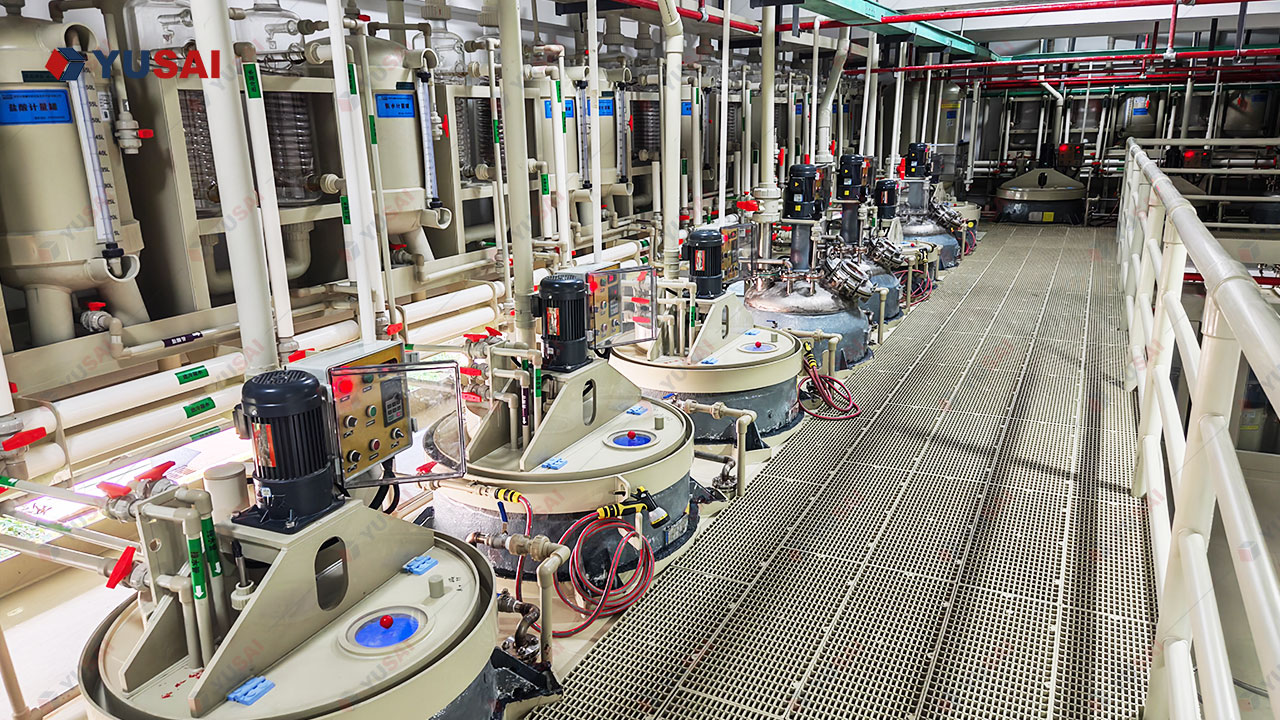
Recycling Value Analysis
Why invest in a refining system instead of selling black mass — where the value is created:
- Metal content is the baseline value. Typical mixed ternary black mass(≈50% NCM622 + 50% NCM811)contains ≈3.6% Li, ≈26.3% Ni, ≈5.7% Co and ≈5.3% Mn;LFP black mass contains ≈2.7% Li plus ≈21% Fe and ≈13% P. Selling raw black mass captures only a discounted “black mass index” price;the refining system captures near-full metal value as battery-grade salts.
- Battery-grade products earn a structural premium. NiSO₄·6H₂O, CoSO₄·7H₂O, MnSO₄·H₂O and battery-grade LiOH·H₂O / Li₂CO₃ are direct raw materials for cathode and precursor plants. A 2025 Chinese-market engineering analysis of a 50,000 t/a project calculated the incremental annual profit of upgrading the lithium product from industrial carbonate to battery-grade lithium hydroxide at over ¥60 million(≈ USD 8.5 million)after the added equipment investment.
- Indicative processing economics(China market, 2025):
- LFP batteries:processing cost ≈ ¥8,500/ton(≈ USD 1,190)vs. recovered value ≈ ¥9,000/ton(≈ USD 1,260);disassembly ≈ ¥2,000, wet lithium extraction ≈ ¥3,000, environmental compliance ≈ ¥1,500. Thin per-ton margin — reagent, energy and water efficiency decide profitability.
- Ternary batteries:processing cost ≈ ¥25,000/ton(≈ USD 3,500);Co/Ni extraction ≈ 48% and lithium extraction ≈ 32% of cost — high metal prices pay for the plant, so extraction efficiency dominates project economics.
- Market and policy tailwinds. Cobalt sulfate prices rose more than 60% in H2 2025(SMM data);lithium carbonate held near ¥77,000/ton. Lithium, cobalt and nickel are designated critical raw materials in the EU and U.S. Third-party forecasts(2025–2026)put the global lithium-ion battery recycling market above USD 10 billion by 2030(China >50% of capacity), with other projections reaching ~USD 37 billion by 2035(≈20% CAGR).
- System by-products earn too. Cathode copper(>98% recovered by electrowinning), aluminum, steel shell and ferric phosphate residue are saleable streams — every fraction of the battery is monetized.
Note: figures above are indicative 2025 market data for investment screening;final economics depend on feedstock, regional prices and operating costs. YuSai provides a project-specific profitability analysis with every quotation.
Applicable Materials
The system accepts all mainstream lithium-ion chemistries, as black mass or as whole cells requiring the optional upstream module:
- Ternary NCM / NCA — spent cells, packs, black mass, cathode/anode scraps and pole pieces
- LFP(lithium iron phosphate) — spent cells, black mass, electrode scraps, production rejects
- 3C batteries — mobile phone, laptop and tablet lithium batteries
- LCO / LMO — lithium cobalt oxide and lithium manganese oxide chemistries(configurable flowsheet)
- Nickel-bearing residues — Ni-containing waste from electrode and precursor production
Typical feed composition(indicative;YuSai tests the customer’s actual material before design):
- Mixed ternary black mass(≈50% NCM622 + 50% NCM811):Li ≈ 3.6%, Ni ≈ 26.3%, Co ≈ 5.7%, Mn ≈ 5.3%, Cu ≈ 1.1%, Al ≈ 0.8%, C ≈ 36%
- LFP black mass:Li ≈ 2.7%, Fe ≈ 21.3%, P ≈ 13.4%, Cu ≈ 2.8%, Al ≈ 1.0%, C ≈ 32%
- Other components:graphite, PVDF binder, residual electrolyte, fluorine, trace Ca / Mg / Zn removed during purification
Product Structure (Main Equipment)
Module 0 — Physical pretreatment(optional upstream, for whole-cell feed)
Battery classification and inspection;automated discharge;inert-gas single-shaft shredder and multi-stage crushers;screening, air classification and gravity/eddy-current separation into black mass, copper foil, aluminum foil, casing and separator;oxygen-free pyrolysis rotary kiln(450–550 °C, 0.5–2 h);fire detection and inert suppression at every high-risk point
Module 1 — Thermal unlocking(ternary line)
Metering screw feeder and acid-mixing unit;sulfation roasting rotary kiln(natural-gas heated, ~350 °C, externally heated drum with internal lifters);sealed conveying and kiln off-gas collection
Module 2 — Leaching & solid–liquid separation
- Selective oxidation leaching reactor train(LFP:H₂SO₄ + O₂/H₂O₂, near-neutral endpoint)
- Water-leaching tanks(lithium from roasted ternary mass)and two-stage countercurrent reductive acid-leaching reactor train(Ni/Co/Mn residue:H₂SO₄ + Na₂SO₃, 60–90 °C)
- filter presses with cake washing, slurry pumps and intermediate storage tanks
- Acid-mist collection hoods and scrubber connection on every reactor
Module 3 — Purification & lithium conversion
- Neutralization and impurity-removal reactor tanks(pH-controlled hydrolysis of Fe, Al, Cu, Mg)
- Resin adsorption columns and precision filters(SS < 1 mg/L, Ca+Mg < 0.1 mg/L)
- Bipolar-membrane electrodialysis(BPED)stack system converting purified lithium sulfate into LiOH solution and recyclable dilute H₂SO₄
- Soda-precipitation option producing lithium carbonate where the market requires Li₂CO₃
Module 4 — Solvent-extraction separation & product finishing
- Mixer–settler extraction banks with saponification and solvent-regeneration circuits:P204(D2EHPA) impurity removal and manganese refining;P507(PC-88A) nickel–cobalt separation;C272 magnesium removal;Lix984 copper-extraction option feeding cyclone electrowinning cells
- Ammonia-recovery tower regenerating the saponifier from ammonium-sulfate raffinate
- MVR evaporators, cooling crystallizers, centrifuges and flash dryers for NiSO₄·6H₂O, CoSO₄·7H₂O, MnSO₄·H₂O and LiOH·H₂O crystals
- Reagent dosing and metering systems(H₂SO₄, H₂O₂, Na₂SO₃, NH₄HCO₃, NaOH)
Module 5 — Environmental & utility systems
- Baghouse dust collectors,semi-dry defluorination tower, RTO(regenerative thermal oxidizer), DeNOx and alkali scrubbing for fluorine/organic off-gas
- Wastewater treatment and closed-loop water-recycle station;ammonia recovery
- PLC/DCS control room with continuous pH/ORP/temperature monitoring, process interlocks and data logging
Lithium-Ion Battery Hydrometallurgical Refining System Process
Stage 0 — Physical pretreatment(optional, for whole-cell feed)
Spent cells are discharged, shredded under inert gas and separated by screening, air classification and gravity separation into saleable copper foil, aluminum foil, steel casing and separator, plus the fine electrode coating powder — black mass — which proceeds to refining. High-binder feed first passes an oxygen-free pyrolysis kiln at 450–550 °C to volatilize electrolyte and decompose PVDF so reagents contact active material directly.
Route A — LFP black mass:selective oxidation leaching(line)
- Selective leaching:LFP powder is leached with sulfuric acid using oxygen or hydrogen peroxide as oxidant. Lithium dissolves selectively;iron and phosphorus remain as solid ferric phosphate:
4LiFePO₄ + 2H₂SO₄ + O₂ → 2Li₂SO₄ + 4FePO₄↓ + 2H₂OEndpoint controlled near neutral pH;leach + filtration cycle ≈ 5 h. - Filtration:lithium sulfate solution is separated from FePO₄/graphite residue by membrane filter press.
- Purification:the lithium liquor is heated and neutralized(pH 11–12, ~70 °C)to hydrolyze and precipitate residual Ni, Co, Mn, Cu, Fe and Mg.
- Deep purification:resin adsorption and precision filtration bring the solution to BPED feed quality(SS < 1 mg/L;Ca+Mg < 0.1 mg/L).
- BPED conversion & crystallization:lithium migrates to the alkali chamber as LiOH solution while sulfate is recovered as dilute H₂SO₄ and recycled to leaching;evaporation and crystallization yield battery-grade LiOH·H₂O;a sodium-carbonate line produces battery-grade Li₂CO₃ where required.
Route B — Ternary NCM/NCA black mass:sulfation roasting + extraction refining(line)
- Sulfation roasting:black mass is mixed with sulfuric acid(≈102% of stoichiometric)and roasted at ~350 °C;lithium leaves the cathode lattice as water-soluble lithium sulfate, while Ni/Co/Mn remain as oxides.
- Water leaching:>95% of the lithium dissolves in water at ambient temperature.
- Lithium purification & recovery:the lithium sulfate solution follows the Route A train(neutralization → resin → precision filtration → BPED)to battery-grade LiOH·H₂O / Li₂CO₃ — lithium is recovered before the nickel/cobalt circuit, avoiding the dilution losses of rear-end lithium routes.
- Reductive acid leaching:the Ni/Co/Mn residue is leached in two-stage countercurrent mode with H₂SO₄ + Na₂SO₃(60–90 °C, L/S ≈ 3–5:1, high-acid start ≈ 200–220 g/L), dissolving Ni, Co, Mn and Cu.
- Copper removal:copper is extracted with Lix984 and recovered as high-purity cathode copper by cyclone electrowinning(>98%);traces are scavenged by sodium thiosulfate precipitation.
- Iron & aluminum removal:ammonium bicarbonate precipitation at pH 3.5–4.0 lowers Fe ≤ 0.1 g/L and Al ≤ 0.2 g/L;jarosite-type residue is filtered off.
- Solvent-extraction separation(P204/P507/C272):a saponified multistage extraction train splits the mixed sulfate solution:
- P204(D2EHPA)at pH 3.0–3.5 removes residual Mn, Cu, Zn, Ca, Fe, Al;then P204 manganese refining isolates the pure manganese stream(≈70% of Mn)for battery-grade MnSO₄·H₂O or MnCO₃;
- P507(PC-88A)at pH ≈ 4.5 extracts cobalt, leaving nickel in the raffinate;P204 cobalt purification polishes the cobalt stream for CoSO₄·7H₂O;
- P507 nickel enrichment followed by C272 removes magnesium, delivering the pure nickel stream for NiSO₄·6H₂O. The ammonia saponifier is regenerated in a closed loop(ammonium-sulfate raffinate + lime → ammonia), eliminating the sodium-sulfate by-product of sodium-soap processes.
- Crystallization:each purified stream is concentrated in MVR evaporators and cooled in crystallizers;centrifuges and dryers produce battery-grade NiSO₄·6H₂O, CoSO₄·7H₂O and MnSO₄·H₂O.
Environmental closure built into the system
- Off-gas:crushing, drying, pyrolysis and roasting streams are dedusted, then routed through semi-dry defluorination → RTO combustion → DeNOx → alkali scrubbing;reactor and extraction-tank acid mists are collected under negative pressure and scrubbed.
- Wastewater:process water is treated and recycled;only laboratory-confirmed compliant streams are discharged;ammonia is recovered;fluoride is precipitated and handled as calcium fluoride sludge.
Whole-system flow summary: Spent batteries / black mass →(discharge → inert crushing → sorting → pyrolysis)→ leaching(sulfation roasting + water leach for ternary / selective oxidation leach for LFP)→ solid–liquid separation → neutralization & impurity removal → lithium:resin → BPED → LiOH·H₂O / Li₂CO₃ → Ni/Co/Mn:reductive leach → Cu electrowinning → Fe/Al removal → P204/P507/C272 extraction separation → MVR crystallization → NiSO₄·6H₂O, CoSO₄·7H₂O, MnSO₄·H₂O;H₂O & H₂SO₄ recycled;off-gas defluorinated, oxidized and scrubbed.
Chemical equations shown are the governing reactions of each stage;full PFDs and PID diagrams are delivered with every system.
Product Features
- Dual-line chemistry-matched design. The system provides dedicated selective oxidation leaching for LFP feed and sulfation roasting + extraction refining for ternary feed — each line engineered to the actual reaction chemistry instead of a generic wet process, protecting recovery rates and avoiding reagent waste.
- Priority lithium extraction with 90–95% Li recovery. Lithium is unlocked in the first chemical step and recovered before the Ni/Co/Mn circuit, avoiding the dilution and multi-stage losses of rear-end lithium routes(typically 50–70%). The concentrated lithium stream also shrinks evaporation load.
- BPED lithium conversion instead of soda precipitation. Bipolar-membrane electrodialysis converts lithium sulfate directly into battery-grade LiOH solution while co-producing dilute H₂SO₄ recycled to leaching — no sodium-sulfate by-product and no external caustic demand for the lithium line.
- Regenerable ammonia saponification in the extraction train. P204/P507/C272 extraction runs on an ammonia saponifier regenerated in a closed loop(lime + ammonium-sulfate raffinate → ammonia)— no NaOH consumption, no sodium-sulfate disposal;documented saving of roughly ¥12 million(≈ USD 1.7 million)per year at 50,000 t/a scale.
- Closed-loop environmental package. Wastewater is treated and recycled;fluorine/organic off-gas passes baghouse → semi-dry defluorination → RTO → DeNOx → alkali scrubbing;all vessels operate under negative-pressure fume collection — a low-discharge, permit-ready plant.
- High automation. PLC/DCS supervisory control with continuous pH, ORP, temperature and flow control on reactors and extraction banks;process interlocks, inert-gas protection and data logging;one control room operates the whole system.
- Modular, scalable turnkey scope. Standard plants from 5,000 to 50,000 t/a;upstream black-mass production line optionally integrated;single-supplier responsibility for feedstock test, flowsheet, fabrication, installation, commissioning and training.
Technical Parameters
| Parameter | Specification(typical) |
|---|---|
| Model series(annual black mass capacity) | 5,000 / 10,000 / 20,000 / 50,000 t/a, customizable |
| Feedstock | Ternary(NCM/NCA)& LFP black mass, spent cells, electrode scraps, 3C batteries |
| Ternary line — sulfation roasting | ~350 °C, H₂SO₄ ≈ 102% of stoichiometric, 0.5–1 h |
| Ternary line — water leaching(Li) | Ambient temperature, >95% Li dissolution |
| LFP line — selective oxidation leaching | H₂SO₄ + O₂/H₂O₂, near-neutral endpoint, leach + filtration ≈ 5 h |
| Pretreatment pyrolysis(optional module) | 450–550 °C, oxygen-free, 0.5–2 h |
| Reductive acid leaching(Ni/Co/Mn residue) | Two-stage countercurrent, 60–90 °C, L/S ≈ 3–5:1, Na₂SO₃ reductant |
| Lithium purification train | Neutralization pH 11–12 at ~70 °C;resin + precision filtration(SS < 1 mg/L, Ca+Mg < 0.1 mg/L) |
| Iron/aluminum removal | NH₄HCO₃ precipitation, pH 3.5–4.0, Fe ≤ 0.1 g/L, Al ≤ 0.2 g/L |
| Solvent extraction | Saponified P204(purification/Mn), P507(Ni/Co split), C272(Mg removal);Lix984(Cu)optional |
| Lithium recovery rate | ≥ 90–95% |
| Nickel / cobalt / manganese recovery | ≥ 95–98% |
| Copper recovery(electrowinning) | ≥ 98% |
| Main products | Battery-grade LiOH·H₂O or Li₂CO₃, NiSO₄·6H₂O, CoSO₄·7H₂O, MnSO₄·H₂O |
| By-products | Cathode copper, aluminum, steel shell, FePO₄ residue, graphite |
| Product purity | Battery grade per customer spec;batch Certificate of Analysis;third-party(ICP)verification supported |
| Process control | PLC/DCS automatic control, continuous pH/ORP/temperature monitoring |
| Environmental | Wastewater treated & recycled;off-gas:baghouse + semi-dry defluorination + RTO + DeNOx + alkali scrubbing |
| Main reagents/utilities | H₂SO₄, H₂O₂/Na₂SO₃, NH₄HCO₃, process steam, natural gas(roasting) |
| Footprint / installed power | Per project design(indicative ≈ 2,350–8,200 m² for LFP lines and ≈ 7,400–32,800 m² for ternary lines including utilities at 1,000–20,000 t/a) |
| Scope of supply | Turnkey:process design, equipment, foundation drawings, installation, commissioning, operator training |
Reference values — the system is engineered to the customer’s feedstock analysis and site conditions;voltage, utilities and local standards are customized. Contact YuSai for the parameter sheet matched to your project.
Advantages
Hydrometallurgical refining vs. pyrometallurgy — why the wet system wins for lithium:
- Lithium recovery:the hydrometallurgical refining system recovers 90–95% of lithium as battery-grade product;pyrometallurgy(smelting > 800 °C)loses most lithium to slag, typically < 50%.
- Product quality:the system outputs battery-grade salts directly usable by cathode plants;pyro routes produce alloy or black mass that still needs further refining.
- Energy & emissions:low-temperature aqueous processing consumes far less energy, produces no smelting slag, and its off-gas and wastewater are contained and treated in closed loops.
- Feedstock flexibility:leaching and extraction parameters are precisely controllable, absorbing the composition swings of mixed battery sources.
Why customers choose the YuSai system:
- Feedstock-first engineering. We test your black mass or batteries before design and issue a testing report with expected recovery rates and product quality — the system is built around your material, not assumptions.
- One responsible partner. Process design, equipment fabrication, installation, commissioning and after-sales from a single manufacturer — no interface disputes between vendors.
- Proven industrial execution. YuSai-built recycling and refining plants operate worldwide;references and site visits available per customer request.
- Cost transparency. Wear parts and consumables supplied at factory cost;the full equipment list and pricing structure provided up front.
- Compliance support. Process documentation, emission/effluent design data and EIA guidance support permit applications in the destination country.
- Lifetime technology upgrading. Flowsheet and automation upgrades from our R&D team are available for the life of the system.
Service Process
- Inquiry & consultation — feedstock type, planned capacity, target products;engineers respond within 24 hours.
- Sample testing — send a black mass or battery sample;we run leaching/recovery tests and return a testing report with expected recovery rates and product quality.
- Process & solution design — customized flowsheet, mass balance, plant layout, equipment list, utility requirements and financial proposal(investment, operating cost, payback).
- Quotation & contract — transparent pricing, delivery schedule and commercial terms.
- Engineering & fabrication — foundation drawings, PFD/PID documentation;shop fabrication with progress updates.
- Delivery — packing for sea/air freight;shipping documents and customs support.
- Installation & commissioning — our engineers supervise installation, run commissioning and reach stable production at contracted parameters.
- Training & handover — operator/maintenance training, manuals, acceptance test with the customer.
- Lifetime after-sales — remote support, spare parts supply, optional technology upgrades.
Warranty & After-Sales Support
- Warranty:12 months from the date of acceptance(signing of the acceptance certificate),covering defects in materials and workmanship.[Webmaster note:align wording with the company’s current warranty clause.]
- Spare parts:a wear/consumable parts list is provided with the system;all parts are available from YuSai at factory cost.
- Technical support:24/7 online response;remote diagnostics through the PLC/DCS system;on-site engineer dispatch when required.
- Documentation:operation, maintenance and electrical manuals;foundation drawings;PFD/PID diagrams;installation videos.
- Upgrades:process and automation upgrades throughout system life;only material costs are charged for client-requested upgrades.
- Commissioning guarantee:the system is commissioned to meet the contracted recovery rates and product specifications before handover.
FAQ(Frequently Asked Questions)
Q1. What is a lithium-ion battery hydrometallurgical refining system?
It is a complete turnkey wet-chemical plant that recovers lithium, nickel, cobalt and manganese from spent battery black mass:pretreatment, leaching(sulfation roasting + water leach for ternary;selective oxidation leach for LFP), impurity removal, solvent extraction(P204/P507/C272), BPED lithium conversion and crystallization into battery-grade lithium hydroxide/carbonate and nickel, cobalt and manganese sulfates — designed, fabricated and commissioned by one manufacturer.
Q2. How does hydrometallurgy compare with pyrometallurgy for battery recycling?
Hydrometallurgy works at low temperature with aqueous acids and selective separation, typically recovering 90–95% of lithium and 95–98% of Ni/Co/Mn as battery-grade salts. Pyrometallurgy smelts above 800 °C and recovers nickel/cobalt alloy efficiently, but most lithium is lost to slag and further refining is needed — which is why hydrometallurgical systems are the preferred choice for lithium-focused recyclers.
Q3. Which battery chemistries can this system process?
LFP black mass via the selective oxidation leaching line and NCM/NCA ternary black mass via the sulfation roasting + extraction refining line, plus LCO, LMO, 3C batteries and electrode scraps with a configurable flowsheet. Share your feedstock mix and YuSai will run a sample test.
Q4. What is black mass, and why is it the system’s feed?
Black mass is the fine dark powder recovered after batteries are discharged, crushed and sorted — the concentrated cathode/anode coating containing lithium, nickel, cobalt, manganese, graphite and carbon. It is the “ore” of battery recycling;the refining system upgrades this powder into pure battery-grade salts.
Q5. What are the final products and their purity?
Battery-grade lithium hydroxide monohydrate(LiOH·H₂O)or lithium carbonate(Li₂CO₃), nickel sulfate hexahydrate(NiSO₄·6H₂O), cobalt sulfate heptahydrate(CoSO₄·7H₂O)and manganese sulfate monohydrate(MnSO₄·H₂O), plus copper, aluminum and iron phosphate by-products. Purity is controlled to battery-grade specification with a batch Certificate of Analysis;third-party verification supported.
Q6. What recovery rates can be guaranteed?
Design targets:≥90–95% lithium, ≥95–98% nickel/cobalt/manganese, ≥98% copper. Guaranteed values are agreed per project from the sample-testing report of your actual feedstock and written into the contract.
Q7. What system sizes are available?
Standard scales from 5,000 to 50,000 tons of black mass per year;smaller pilot lines for feasibility studies are available. Footprint, installed power and utilities are engineered per capacity.
Q8. Do I need a crushing/sorting line before this system?
If you buy black mass from third parties, the refining system starts directly at leaching. For end-to-end recycling of whole batteries, YuSai supplies the upstream discharge → crushing → sorting → pyrolysis line as an integrated first module of the same facility.
Q9. How are wastewater and off-gas handled?
Process water is treated and recycled in closed loops;only verified-compliant streams are discharged. Fluorine/organic off-gas from pyrolysis, roasting and leaching passes baghouse → semi-dry defluorination → RTO → DeNOx → alkali scrubbing before stack release — designed to meet the destination country’s limits.
Q10. What is the typical payback period?
Payback depends on feedstock cost, metal prices and scale. Using indicative 2025 data, a 50,000 t/a project’s incremental economics were analyzed at roughly ¥60M+/year added profit when upgrading the lithium product to battery-grade hydroxide;YuSai provides a project-specific investment/payback analysis in the financial proposal.
Q11. Will you test my material before I buy?
Yes — this is a standard first step. Send a representative sample;we perform leaching/recovery tests and return a report with expected recovery rates and product quality, which becomes the basis of system design and the performance guarantee.
Q12. Do you help with environmental permits, and what are the delivery times?
Yes — we provide process documentation, emission/effluent data and EIA guidance materials for permit applications. Typical equipment delivery is 90–120 days after design approval depending on scale;on-site installation and commissioning take about 4–8 weeks, followed by operator training and acceptance.

Get A Free Quote
Tell us your raw material type, daily processing volume and target products — our engineers will reply within 24 hours with a tailored solution and ROI analysis.
- +86 18339216321
- info@yusaipreciousmetals.com
- Zhengzhou, Henan, China
If you be interested in our equipment and solutions, please to contact us.
- +86 18339216321
- info@yusaipreciousmetals.com
- zhengzhou.henan.china