Introduction
Driven by global carbon‑neutrality targets, electric‑vehicle adoption has brought explosive growth in lithium‑ion battery (LIB) production. After a service life of 5‑8 years, massive volumes of spent lithium‑ion batteries enter the waste stream. Cathode materials including LCO, NCM and LFP contain high‑value strategic metals: lithium, cobalt, nickel and manganese. Without proper recycling, spent LIBs cause heavy‑metal contamination and severe waste of scarce mineral resources.
Traditional industrial recycling routes are dominated by pyrometallurgy and conventional hydrometallurgy. Pyrometallurgy relies on high‑temperature smelting, featuring simple operation yet high power consumption, harmful flue‑gas emissions and partial loss of lithium into slag. Conventional hydrometallurgy delivers high metal recovery rates via strong inorganic acid leaching, but consumes large volumes of mineral acids and generates massive acidic wastewater that raises wastewater‑treatment costs and environmental compliance risks.
Deep eutectic solvent (DES) leaching emerges as a promising green alternative. DES consists of hydrogen‑bond acceptors (e.g. choline chloride) and hydrogen‑bond donors (polyols, organic acids, urea etc). It shows low volatility, low toxicity, biodegradability and tunable redox‑coordination properties, replacing corrosive mineral acids for selective leaching of cathode‑material metals. Mature complete recycling equipment supports the whole workflow: spent‑battery pretreatment, DES leaching, metal separation‑precipitation and solvent regeneration, bridging lab‑scale DES research toward real‑world commercial production.
Main Categories & Performance of DES Leaching Systems
According to solvent composition and auxiliary external fields, DES leaching systems for spent cathode recycling fall into five major categories with distinct technical characteristics.
- Polyol‑based DES Polyols such as ethylene glycol act as hydrogen‑bond donors, paired with quaternary ammonium salts (choline chloride). It was the earliest DES system applied to LIB cathode recovery. It delivers high cobalt and lithium leaching efficiency, good biodegradability and low solvent cost. However, most polyol DES requires harsh operating conditions (temperature >180 °C, long leaching hours), which limits direct large‑scale deployment.
- Organic‑acid‑based DES Organic acids (oxalic acid, lactic acid, malonic acid) serve as hydrogen‑bond donors. Organic‑acid DES integrates acidity, reduction and coordination capacity, achieving high metal leaching yields under relatively mild temperatures (80‑120 °C). Selective separation of Li, Co, Ni and Mn can be realized by adjusting coordination environments. Drawbacks include higher solution viscosity and more complex metal‑ion separation after leaching.
- Polyol‑acid composite DES Combining polyol and organic‑acid components, this composite DES balances low viscosity and strong reduction‑coordination capability. It can achieve selective separation of lithium and cobalt in one‑pot leaching, and maintain stable leaching performance after multiple solvent cycles. Side reactions such as esterification and organic‑acid decomposition bring slight solvent mass loss during circulation, which needs process optimization for industrial use.
- Urea‑based DES Urea‑choline‑chloride DES features low raw‑material cost and intrinsic reduction capacity. Satisfactory leaching performance can be obtained at 160‑170 °C. The main bottleneck is urea thermal decomposition at elevated temperatures, releasing ammonia gas and deteriorating solvent stability.
- DES with external‑field assistance Microwave heating, mechanical‑chemical activation and sacrificial‑metal reductants are introduced to boost reaction kinetics. External‑field assisted DES significantly cuts reaction temperature and shortens leaching time from tens of hours down to dozens of minutes. It effectively lowers overall energy consumption, representing an important direction for process intensification.
Typical optimized lab‑scale leaching performances can reach: Li >98 %, Co >95 %, Ni >94 %, Mn >94 % under well‑adjusted temperature, solid‑liquid ratio and retention‑time parameters.
Core Mechanism of DES Cathode Leaching
Two key mechanisms explain DES‑mediated cathode‑material dissolution: dissolution‑reduction‑complexation mechanism and shrinking‑core kinetic model.
- Dissolution‑reduction‑complexation High‑valence transition‑metal oxides (Co³⁺, Ni³⁺, Mn⁴⁺) in cathode powders cannot dissolve directly. DES components provide protons and reducing species to reduce high‑valence metal ions into divalent states. Then metal ions coordinate with chloride, carboxylate or hydroxyl groups inside DES to form stable soluble coordination complexes such as [CoCl₄]²⁻, thus dissolving into the DES liquid phase.
Two competing viewpoints exist on the reduction source: some research believes organic‑acid moieties act as main reductants; other studies indicate chloride ions take part in redox reactions. This mechanistic difference is still under further verification by academic circles.
- Shrinking‑core kinetic model The shrinking‑core model describes the leaching kinetic process. Solid cathode particles contain an unreacted inner core surrounded by a product layer and stagnant solvent film. Leaching proceeds from particle outer surface inward toward the unreacted core. Under low‑viscosity DES conditions, the overall leaching rate is normally controlled by surface chemical reaction. High DES viscosity will aggravate mass‑transfer resistance and turn the rate‑limiting step into diffusion through the product layer. Adding proper diluents or adopting microwave‑mechanical‑chemical auxiliary methods can reduce viscosity and accelerate mass transfer.
Current Bottlenecks Restricting DES Industrialization
Although DES shows outstanding green advantages in laboratory tests, multiple barriers must be solved before full‑scale commercial application.
- Viscosity challenge: Many DES formulations have high viscosity, slowing mass transfer, reducing solid‑liquid pulp loading and making filtration difficult.
- Solvent recyclability: After metal‑ion leaching, metal‑DES complexes are stable. Conventional precipitation reagents may destroy DES hydrogen‑bond networks and shorten solvent service life.
- Impurity tolerance: Practical spent‑battery black mass contains graphite, copper, aluminium and binder residues. Impurities interfere with DES performance and increase purification costs.
- Process scaling gap: Most high‑efficiency results come from small‑batch lab experiments. Pilot‑scale data, long‑term cycle stability and complete techno‑economic assessment are insufficient.
- Lack of unified industrial standards: No mature industry specifications for DES‑based battery recycling processes and pollutant‑discharge indexes.
Industrial‑Oriented Recycling Solution
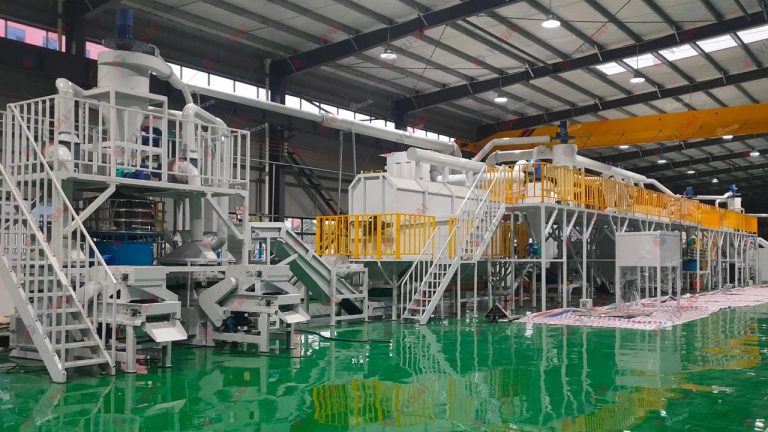
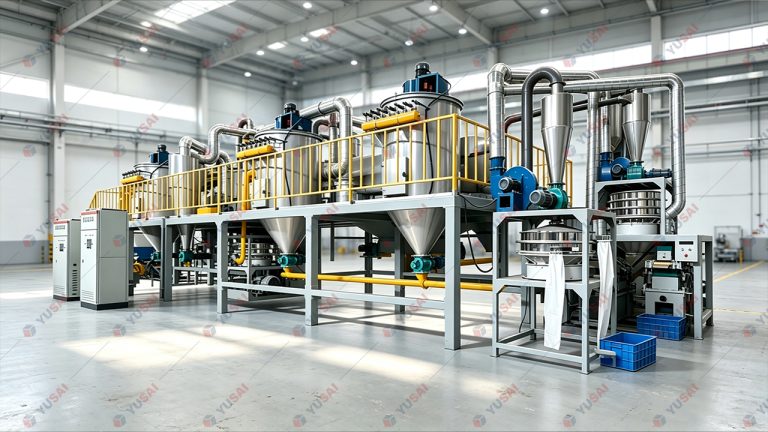
Complete modular spent‑lithium‑battery recycling equipment and technical services cover the full technical chain: pre‑treatment (safe discharging, crushing‑shredding, screening for black‑mass enrichment), leaching reactor units, metal separation & precipitation, solvent recovery and waste‑gas‑waste‑water supporting facilities.
The system supports both traditional hydrometallurgical workflows and flexible switching for DES green‑leaching trials and pilot‑scale production.
Key strengths of the solution
✅ Modular design: Flexible capacity configuration, suitable for small‑to‑medium recyclers and large‑scale industrial plants. Retrofit on existing production lines is available. ✅ Multi‑feedstock compatibility: Process LCO, NCM ternary materials and mixed black‑mass from spent lithium‑ion batteries. ✅ Integrated auxiliary units: Reaction kettles, leaching agitator tanks, solid‑liquid separation, precipitation, electrowinning and waste‑treatment devices are fully matched for DES‑based workflows. ✅ Customizable technical support: Raw‑material sample testing, process‑parameter optimization, installation‑commissioning and operator‑training services are available. ✅ Environment‑oriented setup: Reduce strong‑acid consumption and wastewater loads when adopting DES routes, helping facilities meet increasingly strict environmental‑protection requirements.
Outlook for DES‑based LIB Recycling
Against the background of global circular‑economy policies for power batteries, DES technology represents a promising green recycling path. Future development directions include:
- Rational molecular design of low‑viscosity, high‑selectivity, stable DES formulations for target‑metal separation without destroying solvent structures.
- Optimize battery pre‑treatment technology to lower graphite, Cu‑Al impurity interference for DES leaching.
- Expand pilot and demonstration projects to accumulate scaling‑up data, verify long‑term solvent cycling performance and improve overall process economics.
- Promote formulation of industry standards for green‑solvent battery‑recycling processes.
Combining advanced DES green‑leaching chemistry with mature industrial equipment is the key to convert laboratory achievements into real‑world circular‑economy value. Technical communication and project cooperation are welcome for battery recyclers, hydrometallurgy enterprises and research institutes.