
Ternary Lithium Battery Recycling Plant
— Turnkey Ternary Lithium Battery Recycling Plant
The YuSai ternary lithium battery recycling plant is a complete turnkey system that recovers lithium, nickel, cobalt, manganese, copper and aluminum from spent NMC/NCM and other lithium-ion batteries. Built on an oxygen-free crushing and low-temperature pyrolysis pretreatment combined with a green hydrometallurgical route — priority lithium extraction, bipolar membrane electrodialysis and P204/P507/C272 solvent extraction — it delivers battery-grade lithium hydroxide or lithium carbonate and nickel/cobalt/manganese sulfates at an overall metal recovery above 95% and product purity up to 99.5%.
Product Overview
Spent ternary (NMC/NCM) lithium-ion batteries are the highest-value stream in the battery recycling market: a single ton of ternary black mass carries meaningful quantities of cobalt, nickel, manganese and lithium — metals that are expensive to mine, geopolitically sensitive and essential to every EV and energy-storage battery built today.
The YuSai ternary lithium battery recycling plant is a modular, turnkey solution that turns this waste stream into saleable, battery-grade material. Feeding on spent ternary cells and electrode scrap, the plant first liberates the battery components with an oxygen-free crushing and sorting process under inert-gas protection — no brine discharge, no open burning, no dust leakage. The recovered black mass then enters the wet process: a priority lithium extraction step pulls lithium out first and concentrates it, so that lithium recovery reaches over 90% instead of the 50–70% typical of conventional back-end processes; the remaining nickel, cobalt and manganese are separated and refined through leaching and a low-cost, recyclable solvent-extraction system into battery-grade sulfate salts. What leaves the plant is not mixed residue but products the battery industry will buy back: battery-grade lithium hydroxide or lithium carbonate, nickel sulfate, cobalt sulfate, manganese sulfate, clean copper and aluminum granules.
Every plant is engineered around three questions — what you feed, how you process it, and what you sell out — and is delivered as a full turnkey project: feedstock analysis and sample testing, process design, manufacturing, installation and commissioning, operator training, environmental compliance support and lifetime after-sales service. It is the choice of EV battery recyclers, battery manufacturers, urban-mining investors and EPC project owners who need a safe, profitable and genuinely green lithium battery recycling business.
Recycling Value Analysis
Composition value. Ternary black mass is far richer than LFP black mass. Typical ternary black mass contains roughly 2.5–4% lithium, 7–20% nickel (higher in high-nickel NMC811 systems), up to about 16% cobalt in NCM523-type material and around 5% manganese; LFP black mass, by contrast, holds under 0.5% cobalt and little nickel. Cobalt and nickel — the two metals that drive recycling economics — simply are not present in meaningful quantity in the lithium iron phosphate stream. (Indicative ranges based on European black mass samples and Chinese recycling process data, 2025 market analysis.)
Market prices. Market analysis (China Nonferrous Metals Industry Association and SMM battery recycling data, 2025) shows cobalt sulfate surging more than 60% in the second half of 2025 to about ¥88,100/ton, nickel sulfate steady at about ¥28,550/ton, and lithium carbonate around ¥76,950/ton — which then rebounded strongly through 2026 (lithium carbonate traded near CNY 152,250/ton in August 2026, up about 84.6% year-on-year, TradingEconomics.com). The global lithium battery recycling market is projected to exceed USD 10 billion by 2030, with China accounting for over half.
Cost structure. Recycling a ton of spent ternary batteries costs roughly ¥25,000 (USD ~3,500), of which Co/Ni extraction via acid leaching and solvent extraction is the largest item (about 48%), lithium recovery about 32%, and environmental compliance the balance. Against battery-grade selling prices — and with the copper and aluminum fractions recovered and sold separately — a plant typically reaches payback within 12–24 months. A detailed financial proposal and market analysis are prepared with every quotation.
Applicable Materials
- Spent ternary cells — iron-can NCM/NCA cells, pouch NCM/NCA cells, cylindrical cells (18650/21700), prismatic cells and complete EV battery packs after pack dismantling
- Consumer batteries — mobile phone and laptop lithium-ion batteries
- Production scrap — positive and negative electrode sheets (scrap cathode/anode foil) from battery plants
- 3C batteries and nickel-bearing wastes — compatible feedstocks for the wet section
- LCO (lithium cobalt oxide) batteries — fully compatible
- LFP (lithium iron phosphate) batteries — processable with configuration adjustment, using the same pretreatment line
Note: cells are pre-sorted by cathode chemistry before feeding — ternary and LFP streams run on separate, dedicated lines to protect product purity and recovery.
Product Structure (Main Equipment)
Pretreatment & physical separation module
- Anaerobic (oxygen-free) crusher with inert-gas protection — breaks shells and liberates components from live or residual-energy cells without brine discharge
- Closed conveying and drying system — dries crushed material and volatilizes electrolyte at low temperature under nitrogen flow
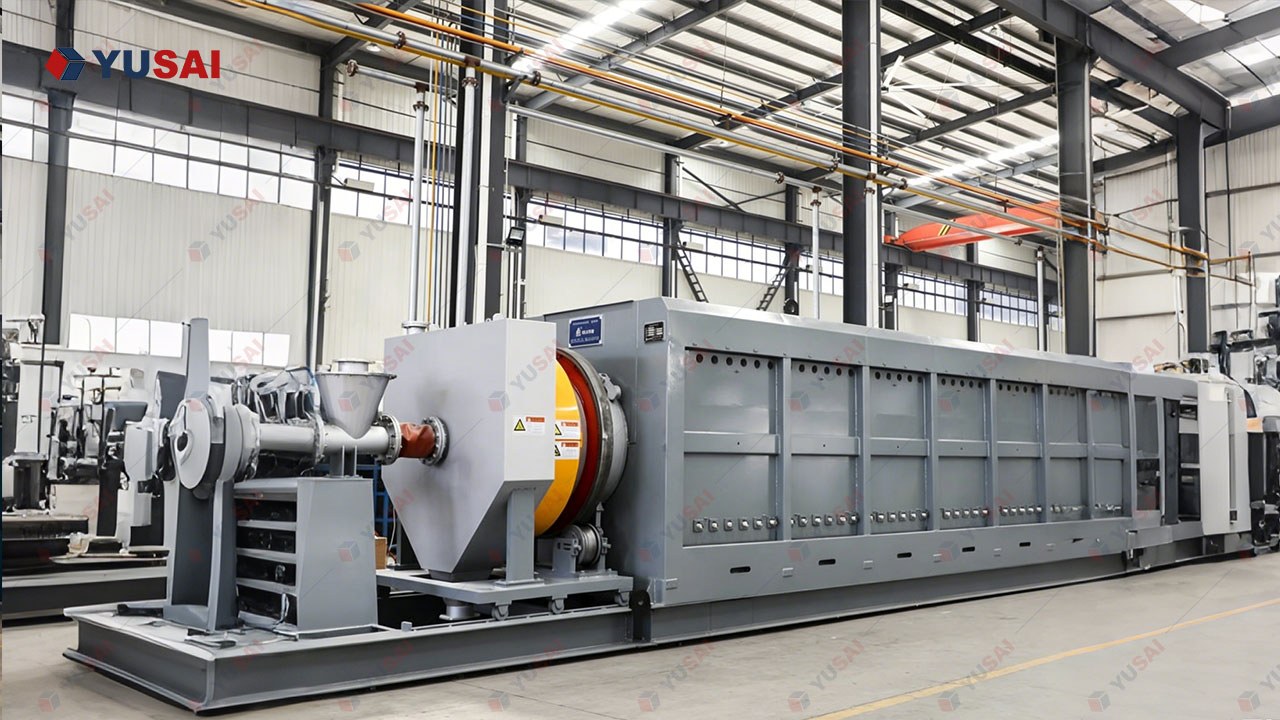
- Low-temperature pyrolysis (carbonization) furnace — anaerobic treatment of separator, binder and remaining electrolyte; flue gas recovered and purified
- Grinding and screening equipment — vibrating screens, drum and classifying screens for size-based classification
- Physical separators — magnetic removal of steel shells, eddy-current separation of aluminum, gravity/air and electrostatic separation for copper and black mass
- Friction washing unit — recovers black powder adhering to shells and separator
- Pulse dust collectors and negative-pressure system — dust-free operation
- Off-gas treatment train — baghouse collection, semi-dry defluorination, RTO (regenerative thermal oxidizer), denitrification and alkali scrubbing for fluorinated organic exhaust
Hydrometallurgical (wet treatment) module
- Sulfation roasting kiln and water-leaching system — priority lithium extraction that concentrates lithium in one step
- Bipolar membrane electrodialysis (BPED) unit — direct conversion of lithium sulfate solution into battery-grade lithium hydroxide and reusable sulfuric acid
- Leaching reactors and filter presses — reductive acid leaching of the nickel-cobalt-manganese residue
- Copper recovery unit — solvent extraction with electrodeposition for high-purity cathode copper
- Impurity removal reactors — iron, aluminum, calcium and magnesium removal
- Solvent-extraction mixer-settler trains — P204 (impurity removal and manganese refining), P507 (nickel-cobalt separation) and C272 (magnesium removal), with recyclable ammonia saponification
- MVR evaporator and crystallizer — concentration and crystallization of nickel, cobalt and manganese sulfates
- Centrifuge and drying/packaging system
- (Optional) NCM precursor co-precipitation line
- Closed-loop wastewater treatment unit
Process Flow
The plant follows the route: oxygen-free crushing & sorting → low-temperature pyrolysis → priority lithium extraction → leaching & solvent-extraction refining → crystallization & products, with every off-gas and water stream treated in a closed loop.
- Crushing & sorting (pretreatment). Spent batteries — with or without residual charge — are crushed in a dedicated anaerobic crusher under inert-gas protection and forced disturbance, avoiding the brine-discharge step used by conventional plants. Crushed material is conveyed in a closed system and dried at low temperature, volatilizing the electrolyte; the dried fragments are classified by size and separated by specific gravity into shells, separator and electrode fractions. Electrode pieces are decomposed in a high-speed machine that liberates copper and aluminum granules from the active-material coating, which becomes fine black mass powder.
- Low-temperature pyrolysis. Black powder and residue are pyrolyzed in an anaerobic rotary kiln at controlled low temperature, decomposing the binder and any remaining electrolyte without open burning. The fluorinated organic off-gas is treated by baghouse collection, semi-dry defluorination, RTO combustion, denitrification and alkali scrubbing — meeting stringent emission limits.
- Priority lithium extraction. The calcined ternary powder is mixed with sulfuric acid and roasted at about 350 °C, which pulls lithium out of the cathode crystal lattice as water-soluble lithium sulfate while nickel, cobalt and manganese remain in the solid residue. Simple water leaching then dissolves more than 95% of the lithium in one concentrated step — no back-end dilution, no lithium lost in refining.
- Battery-grade lithium production. The purified lithium sulfate solution feeds a bipolar membrane electrodialysis (BPED) system, which splits it directly into battery-grade lithium hydroxide solution and reusable sulfuric acid under a DC field. The LiOH solution is evaporated and crystallized to battery-grade LiOH·H2O; a lithium carbonate production option is available for clients targeting Li2CO3.
- Nickel-cobalt-manganese refining. The NCM residue is leached with sulfuric acid under reducing conditions; copper is recovered first by solvent extraction and electrodeposition as high-purity cathode copper, and iron/aluminum are removed by precipitation. The purified solution then passes through a recyclable solvent-extraction train — P204 for impurity removal and manganese refining, P507 to separate nickel and cobalt, C272 to strip magnesium — followed by MVR evaporation and crystallization into battery-grade nickel sulfate, cobalt sulfate and manganese sulfate crystals. An optional line synthesizes NCM precursor from the purified salts.
- By-products & environmental protection. Steel shells, copper and aluminum granules are recovered for direct resale; process water is treated and recycled in a closed loop; ammonia saponification reagent is regenerated on site, minimizing chemical cost and wastewater.
Product Features
- Lithium-first process. Priority lithium extraction raises lithium recovery from the industry’s typical 50–70% to over 90%, and BPED produces lithium directly as battery-grade hydroxide — a higher-value product than industrial carbonate.
- Safe by design. Oxygen-free crushing under inert-gas protection removes the fire and explosion risk of live cells and eliminates brine-discharge wastewater; the whole line runs under negative pressure with pulse dust collection.
- High metal recovery. Hydrometallurgical recovery above 95% overall — nickel and manganese ≥95%, cobalt ≥98%, copper and aluminum ≥98% — versus pyrometallurgy, which loses more than half the lithium to slag.
- Battery-grade output. Products meet battery-grade specifications (purity ≥99.5%) and can be sold back to cathode active material (CAM) and battery manufacturers, closing the supply loop.
- Low-cost, green refining. Ammonia-based saponification with on-site reagent regeneration and a low-cost defluorination + RTO off-gas route cut both operating cost and wastewater volume compared with sodium-soap and direct-combustion alternatives.
- Clean environmental footprint. Fluorinated organic exhaust is treated to below international emission limits; process water is recycled; no mixed copper-manganese slag is generated.
- Fully automated. PLC central control, low labor requirement, stable round-the-clock operation.
- Modular and scalable. Pretreatment, lithium and Ni/Co/Mn sections can be combined at any scale — pilot to multi-ten-thousand-ton annual projects.
- Turnkey delivery. Sample testing, process design, manufacturing, installation, commissioning, training and lifetime support from one manufacturer.
Technical Parameters
| Parameter | Value |
|---|---|
| Feedstock | Spent ternary (NMC/NCM/NCA) cells, 3C and LCO batteries, electrode scrap; LFP compatible with adjustment |
| Core process | Oxygen-free crushing → low-temperature pyrolysis → priority lithium extraction → BPED / solvent extraction (P204, P507, C272) → crystallization |
| Overall metal recovery | ≥ 95% |
| Lithium recovery | ≥ 90% (priority lithium extraction; conventional back-end processes: 50–70%) |
| Nickel / Manganese recovery | ≥ 95% |
| Cobalt recovery | ≥ 98% |
| Copper / Aluminum recovery | ≥ 98% |
| Lithium product | Battery-grade LiOH·H2O (standard) or Li2CO3 (optional), purity ≥ 99.5% |
| Nickel / Cobalt / Manganese products | Battery-grade NiSO4·6H2O / CoSO4·7H2O / MnSO4·H2O, purity ≥ 99% |
| By-products | Cathode copper, aluminum granules, steel shells, plastics, separator |
| Optional line | NCM ternary precursor synthesis |
| Control system | PLC centralized control, automated operation |
| Environmental compliance | Closed-loop wastewater; off-gas treated by defluorination + RTO + alkali scrubbing, meeting international emission standards; EIA support provided |
Advantages
- Higher lithium revenue per ton — the lithium-first route recovers over 90% of lithium (versus 50–70% conventionally) and upgrades it to battery-grade hydroxide, the fastest-growing lithium product for high-nickel battery makers.
- Premium products, premium prices — battery-grade salts and lithium hydroxide are sold directly to CAM and battery manufacturers rather than discounted as mixed residue.
- Safer and cleaner than smelting — no high-temperature furnaces, no dioxin, no heavy-metal fume; inert-gas crushing is inherently safer than brine discharge and shredding of live cells.
- Lower operating cost — ammonia saponification with on-site regeneration, priority lithium extraction cutting evaporation load, and closed-loop water all reduce per-ton cost; no sodium sulfate by-product to sell.
- One-stop turnkey accountability — a single manufacturer for design, equipment, installation, training and after-sales, with factory-direct pricing.
- Investment confidence — sample testing before order, financial proposal and market analysis for feasibility, EIA guidance, and 12-month warranty with lifetime technical support.
- Global service — English-speaking engineers, 24-hour online response, remote diagnosis and on-site support worldwide.
Service Process
- Consultation — raw material type and source, target products, daily/annual throughput, site and budget.
- Sample testing — your actual battery material is tested and a testing report issued.
- Solution design — process flow, layout drawing, equipment list and environmental compliance plan.
- Quotation — detailed quotation with financial proposal and market analysis.
- Production — manufacturing with factory trial run; photos and videos shared before shipment.
- Shipment — FOB/CIF/DDP options and complete shipping documentation.
- Installation & commissioning — our engineers install and commission the line on site.
- Training — two-stage training (pre-delivery and on-site) covering operation, maintenance and troubleshooting.
- After-sales — 12-month warranty, lifetime technical support, spare parts and technology upgrading.
Warranty & After-Sales
- 12-month warranty from the date of acceptance — defective parts repaired or replaced free of charge.
- Lifetime technical support by phone, WhatsApp, email and video call.
- 24-hour online response with remote diagnosis.
- On-site installation, commissioning and operator training included; engineers dispatched for troubleshooting when required.
- Spare parts available at cost price, shipped promptly.
- Continuous technology upgrading from our R&D team and regular operation follow-up.
FAQ (Frequently Asked Questions)
Q1. What is a ternary lithium battery recycling plant?
A complete production line that safely recovers lithium, nickel, cobalt, manganese, copper and aluminum from spent NMC/NCM lithium-ion batteries. It combines oxygen-free crushing, low-temperature pyrolysis and a green hydrometallurgical route — priority lithium extraction, bipolar membrane electrodialysis and P204/P507/C272 solvent extraction — to produce battery-grade lithium hydroxide or carbonate and nickel/cobalt/manganese sulfates.
Q2. Which batteries can it process?
Iron-can and pouch NCM/NCA cells, cylindrical cells, prismatic EV battery packs (after dismantling), mobile and laptop batteries, electrode sheets and LCO batteries; LFP batteries are processable with configuration adjustment on the same pretreatment line.
Q3. What are the final products?
Battery-grade lithium hydroxide (LiOH) or lithium carbonate (Li2CO3), nickel sulfate, cobalt sulfate and manganese sulfate, with an optional NCM precursor line; plus copper and aluminum granules, steel shells and plastics as clean by-products.
Q4. What recovery rates and purity can be achieved?
Overall metal recovery above 95%: lithium ≥90% (priority lithium extraction; conventional processes 50–70%), nickel and manganese ≥95%, cobalt ≥98%, copper and aluminum ≥98%. Product purity ≥99.5%, battery grade.
Q5. Why hydrometallurgy instead of pyrometallurgy?
Smelting recovers nickel and cobalt but loses more than half the lithium to slag and consumes high energy. Hydrometallurgy achieves >90% lithium recovery, battery-grade purity, and lower energy use and emissions at low temperature.
Q6. How does the plant avoid losing lithium?
By extracting lithium first — sulfation roasting pulls lithium into a concentrated solution before nickel/cobalt/manganese refining begins, and BPED converts it directly to battery-grade LiOH. Lithium is never diluted or lost in downstream refining steps.
Q7. Can capacity and configuration be customized?
Yes. The plant is modular — pretreatment, lithium section and Ni/Co/Mn refining section can be combined from pilot scale to multi-ten-thousand-ton annual projects, targeting LiOH or Li2CO3 as you choose.
Q8. What is the cost and payback period?
Cost depends on capacity and configuration. With cobalt sulfate prices up over 60% in H2 2025 (about ¥88,100/ton) and lithium carbonate rebounding through 2026, typical payback is 12–24 months. A financial proposal and market analysis accompany every quotation.
Q9. Is the process safe and environmentally compliant?
Yes. Oxygen-free crushing under inert-gas protection eliminates fire/explosion risk and brine wastewater; fluorinated off-gas is treated by defluorination + RTO + alkali scrubbing; process water is recycled. EIA guidance and certificates are provided.
Q10. What services are included?
Turnkey: sample testing, process design, manufacturing with factory trial run, installation and commissioning, two-stage training, 12-month warranty, lifetime technical support, spare parts at cost and EIA support.

Get A Free Quote
Tell us your raw material type, daily processing volume and target products — our engineers will reply within 24 hours with a tailored solution and ROI analysis.
- +86 18339216321
- info@yusaipreciousmetals.com
- Zhengzhou, Henan, China
If you be interested in our equipment and solutions, please to contact us.
- +86 18339216321
- info@yusaipreciousmetals.com
- zhengzhou.henan.china