— OEM ODM-SINCE 1995
Lead-Acid Battery Recycling Plant
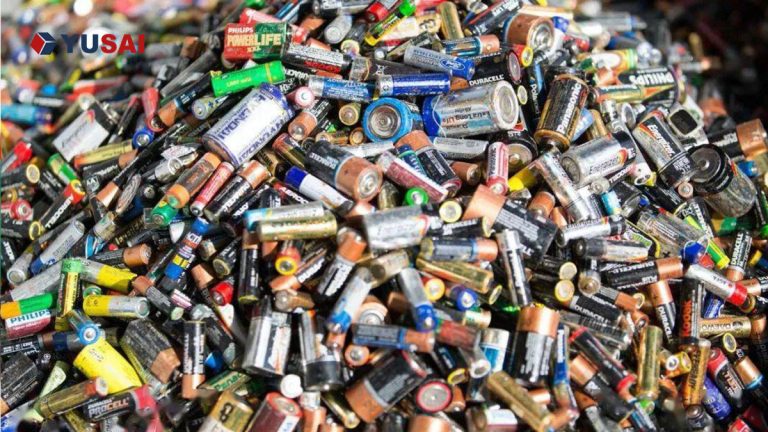
Raw Materials:Various types of waste lead-acid batteries, such as car batteries, truck batteries, and electric bicycle batteries, etc.
Final Products: Crude Lead,Lead Slime,Refined Lead Ingot,Lead Paste,Plastic,Lead Grid,Plastic Granules,Battery Separator, etc.
Main Part: crusher, oxygen side blownreduction smelting,crude lead refining furnace,lead lngot casting machine, etc.
Product Description
Lead Acid Battery Recycling Plant Machinery is becoming increasingly important as the number of waste lead-acid batteries continues to grow worldwide. With the rapid development of automotive and energy storage industries, battery recycling is not only environmentally necessary but also a profitable business opportunity.
we specializes in advanced lead acid battery recycling plant machinery designed for efficient and stable recycling operations. Our lead acid battery recycling line can process automotive batteries, UPS batteries, and industrial lead-acid batteries with high recovery efficiency.
Lead acid battery recycling plant setup starts turning scrap into profit through responsible battery recycling. A properly planned lead acid battery recycling recycling facility not only generates strong revenue from recovered lead and polypropylene but also qualifies for government green incentives.

Lead-Acid Batteries Recycling Value
Lead-acid batteries are among the industrial products with the highest global recycling rates and the most mature closed-loop economic models. Their raw materials can be almost 100% recycled, and the economic value of their key components is as follows:
- Metallic lead (accounting for approximately 60%–70%): This is the primary source of value. Through smelting, the lead paste and lead plates from spent batteries can be fully converted into recycled lead. Producing recycled lead consumes only about 35% of the energy required for primary lead production, offering a significant cost advantage.
- Casing plastic (accounting for approximately 5%–10%): The main component is high-density polypropylene (PP). After crushing, washing, and pelletizing, the material can be directly used to manufacture casings for new batteries, achieving a perfect closed-loop cycle.
- Waste acid (accounting for approximately 10%–15%): Dilute sulfuric acid can be purified for reuse or converted via chemical reactions into industrial by-products (such as high-purity sodium sulfate), thereby eliminating environmental risks while generating added value.
Raw Materials
Lead Acid Battery Recycling Equipment processes raw materials: Used lead-acid batteries, Car batteries, Electric car batteries, Electric bike batteries, etc.
Final Products
Lead Acid Battery Recycling Plant Final product: Scrap lead acid battery will be separated by the “Lead acid battery cutting machine”. filtered lead mud, grid lead, heavy plastics, light plastics and unclassified materials can be separated. After smelting and refining process, will get pure lead or lead alloy. And plastic also be reused after granulation.
Lithium-ion Battery Pyrolysis Recycling Plant Working Process
Our lithium-ion battery pyrolysis recycling process combines mechanical processing with a carbonization/thermal treatment furnace (lithium battery pyrolysis furnace), all conducted in a fully automated, oxygen-free, and safe environment.

1. Battery Classification: Before processing, the batteries need to be classified. After classification, the batteries are fed into the machine.
2. Battery Discharging: Batteries are discharged to eliminate the risks of fire and explosion.
3. Battery Dismantling: It transports the discharged battery to a single-shaft crusher. The crushed battery is broken into small pieces of 2-3 cm under nitrogen protection, initially separating the battery casing, anode plate, cathode plate, and separator.
4. Thermal Treatment: The crushed material is conveyed by a screw conveyor into a dedicated lithium battery pyrolysis furnace (commonly known as a carbonization/heat treatment furnace). This furnace operates in an oxygen-free environment at a high temperature of 400-650°C. The generated electrolyte waste gas is sent to the electrolyte secondary combustion chamber, and then treated by a tail gas treatment system (scrubber + activated carbon + catalytic combustion system) to ensure compliance with environmental protection requirements.
5. Gravity Separation (Shell Sorting): The thermally treated mixture is fed into a gravity separator, which utilizes weight differences to effectively sort and remove the heavy battery outer shells (iron/stainless steel).The Magnetic Separator then recovers the steel shell (iron shell) from the mixture of shells.
6. Rotary Screening: The heavy material moves to the Rotary Drum Screen to screen out black mass. Material above the screen is conveyed to the Crusher with Noise Proof Room, which breaks the anode and cathode metal pieces and knocks down the black mass.
7. Air Separation: Air Separation System separates the copper granules and aluminum granules with remarkable precision, yielding clean, sellable metal scrap.
8. Exhaust Gas Treatment System: A comprehensive environmental control system captures the off-gases from the pyrolysis and crushing stages. Using secondary combustion, cooling , dust collector, defogger and activated carbon scrubbers, it neutralizes VOCs and acid gases, ensuring your plant meets all local emission standards.The floating black substance was collected by the cyclone separator.
9. Nitrogen Protection System: Safety is non-negotiable. Throughout the shredding, crushing, and sorting stages, an automated Nitrogen (N2) inerting system displaces oxygen, effectively eliminating the risk of combustion or explosion.
Lithium battery pyrolysis recovery equipment features advantages
1.Unmatched Cell Compatibility
Our lithium battery recycling plant is engineered to handle a wide spectrum of spent batteries, regardless of their complexity, shape, or chemistry:
Cell Form Factors: Fully compatible with Cylindrical cells (e.g., 18650, 21700, 32650), Pouch cells, and Prismatic hard-shell cells.
Battery Chemistries: Covers Lithium Iron Phosphate (LFP), Nickel Manganese Cobalt (NMC/NCA), and Lithium Cobalt Oxide (LCO).
Application Scenarios: Supports large-scale processing ranging from small consumer electronics (phones, laptops) to massive Electric Vehicle (EV) battery packs and Energy Storage Systems (ESS).
2.High-Purity Black Mass Recovery
The core value of lithium battery recycling lies in the “Black Mass.” Our process utilizes multi-stage precision sorting to ensure maximum economic returns:
Black Mass Purity: Leveraging advanced sorting technology, the recovery purity of black mass exceeds 98%.
Multi-Component Separation: The system efficiently isolates high-purity copper foil, aluminum foil, plastic separators, and casing metals (Aluminum/Iron).
Output Value: The recovered black mass is rich in rare metals like lithium, cobalt, and nickel, which can be directly fed into hydrometallurgical processes for a true closed-loop resource cycle.
3.Industrial Safety & Fire Protection
Addressing the flammable and explosive nature of lithium batteries, we have integrated an industry-leading safety control system:
Nitrogen Protection System: An inert gas (Nitrogen) is injected during the fully enclosed crushing process to keep oxygen levels below the safety threshold, fundamentally eliminating fire and explosion risks.
Sealed Environment: The entire crushing and sorting sequence operates under negative pressure in a sealed environment, effectively preventing the leakage of electrolyte volatile gases.
Eco-friendly Treatment: Equipped with pulse dust collectors and acid gas scrubbing towers, the system ensures that exhaust emissions strictly comply with international environmental standards (ISO/CE certified).
Technical Parameters
| Model | PCS1000 | PCS1500 |
| Capacity | 800-1000kg/h | 1500-1600kg/h |
| Power | 480Kw | 530Kw |
| size | 50*8*6(m) | 60*8*6(m) |
| weight | 15(ton) | 30(ton) |
Note:
1. Working voltage:380±10V(415V ,440V also can be custom);
2. The parameters and configurations above are for reference only. We can provide customized solutions and related lithium battery recycling machines based on different requirements. Please feel free to contact us anytime to discuss your specific needs.

Leave us a message
If you have any requirement or suggestion, please fill in the form and send to us, thanks!