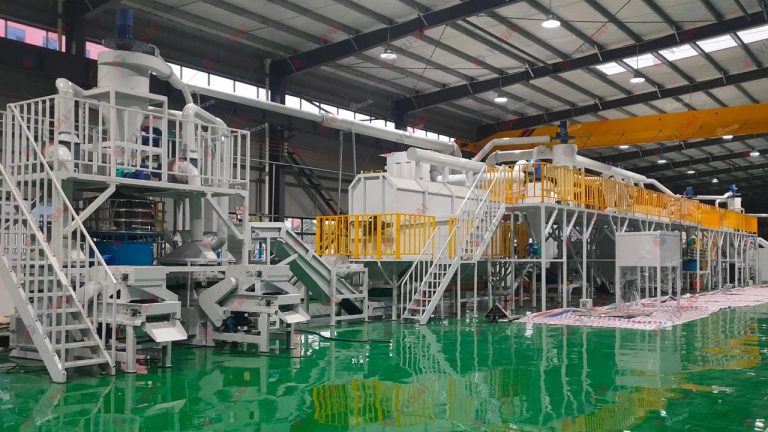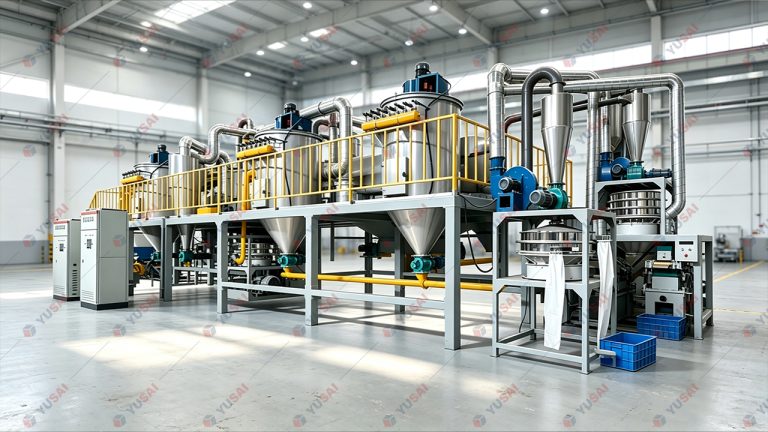
Lithium battery black mass extraction is a mature hydrometallurgical recycling technology that recovers valuable metals from the black powder (black mass) of spent lithium-ion batteries via controlled chemical treatment. Below is a full introduction to this technical workflow.
The raw material for this process is end-of-life lithium-ion batteries. A lithium cell consists of three core parts: cathode, anode and electrolyte. The cathode and anode contain lithium-bearing metal compounds. First, battery shells are opened, and internal electrode materials are separated. These electrode powders form the so-called black mass, the key feedstock for metal extraction.
The next core step is acid leaching. Black mass is mixed with strong acid such as sulfuric acid inside sealed reaction systems. Heating is applied to accelerate chemical reactions, converting lithium and other valuable metals into soluble metal salts. The reaction releases gas, so the whole leaching unit must be airtight for safety. Operators adjust reaction speed and temperature by adding diluted acid or water.
During leaching, target metals in black mass gradually dissolve into the acidic solution and exist as metal ions. Subsequent neutralization and selective precipitation separate different metals from the leachate. By adding tailored precipitants and adjusting pH, each metal ion turns into low-solubility solid precipitate step by step, realizing graded metal separation.
The separation and purification of metal precipitates cover precipitation, filtration, washing and drying. After neutralization of the metal-rich leachate, solid precipitates form. Filtration removes solids from residual acid liquor and impurities. Multiple cycles of washing eliminate residual contaminants to upgrade product purity. Finally, drying is carried out to obtain high-purity metal precipitates.
The recovered high-purity metal products can be reused as raw materials for new lithium batteries and other industrial applications, supporting the circular supply chain of battery critical metals.
Environmental compliance is mandatory for black mass extraction recycling. All waste liquid and solid residues must be treated properly following local environmental regulations to avoid pollution and protect operator health.
This extraction route provides a practical, scalable solution for spent lithium battery resource recovery.