Introduction
The global demand for lithium-ion batteries continues to surge across EVs, energy storage and consumer electronics. Alongside this rapid growth comes a fast-expanding volume of end-of-life lithium batteries. Improper disposal of spent LIBs poses severe environmental risks: heavy metal ions from cathode materials, carbon dust from anodes, strong alkaline electrolytes may leach into soil and water, causing ecological contamination. Meanwhile, waste lithium batteries contain high-value critical metals including lithium, cobalt, copper and aluminum, making recycling both environmentally necessary and economically attractive.
As a professional manufacturer of lithium battery recycling equipment, we deliver integrated process lines and customized technical solutions for spent lithium battery recovery projects. Based on practical project commissioning and operation records, our equipment safely separates electrode materials and extracts valuable metals, helping recycling plants improve recovery efficiency, reduce environmental hazards and maximize project revenue.
Battery Structure & Recycling Challenges
A lithium-ion battery consists of metal casing and internal cells, with separators, cathode and anode foils.
- Cathode: Lithium cobalt oxide powder, carbon black conductive agent and organic binder coated on aluminum current collector foil
- Anode: Carbon powder and binder coated on copper current collector foil
After repeated charge-discharge cycles, batteries suffer capacity attenuation, electrode swelling and eventually reach end-of-life. Direct dumping is hazardous, while conventional recycling lines often face safety risks, unstable separation efficiency, high reagent cost and secondary pollution. Our equipment system is designed to tackle these pain points.
Main Recycling Process Technology
We support multiple technical routes and can configure production lines according to customer raw material, local environmental regulations and target finished products.
- Pyrometallurgy (High-temperature calcination) Pyrometallurgy decomposes organic binders and separators at high temperature to concentrate valuable metal powder. This method features simple operation and relatively high metal recovery rate. However, it consumes large energy and carries risks of secondary emissions. We provide optimized thermal treatment modules with full flue gas purification for clients who select this route.
- Precipitation Method (Hydrometallurgy) Precipitation is widely adopted in hydrometallurgical refining. By adjusting temperature, pH value and adding precipitant, valuable metal ions in leachate precipitate and are collected. For lithium carbonate recovery: concentrate the leachate, heat and stir at 85℃, add alkali and oxalic acid for impurity removal, filter and add complexing agent and carbon powder. Then add sodium carbonate, heat up to 95℃ for precipitation. After filtration, washing and drying, lithium carbonate product can be obtained. Lithium single-pass recovery rate exceeds 80%, and overall metal recovery can approach nearly 100%. The main limitations are high chemical consumption and complex subsequent separation of mixed metal precipitates. Our supporting leaching & precipitation equipment is equipped with automatic dosing and filtration units to cut reagent waste and simplify operation.
- Solvent Extraction Method Organic extraction uses selective organic solvents to form metal complexes, transferring target metals into organic phase for purification. It achieves high recovery rate and high-purity metal products. But organic solvents are costly, toxic to operators and hard to recycle, limiting large-scale industrial application. Our technical team helps clients optimize extraction formulas and solvent recovery systems to lower operating costs.
Traditional Process vs. New Regeneration Technology
Traditional recycling mainly extracts metals and black mass from spent batteries. Emerging regeneration technology focuses on cathode material direct repair. Using advanced pulsed laser cleaning technology, the equipment removes passivation layers on electrode sheets, refines active particles and restores cathode performance. The technology reduces raw material cost, extends battery material lifecycle and cuts carbon footprint. At present, direct regeneration technology is still under continuous optimization and not fully mature for mass production.
We provide flexible line design: customers can choose conventional mechanical separation + hydrometallurgy for stable industrial production, or reserve upgrade interfaces for future cathode regeneration transformation.
Our Equipment & Project Value
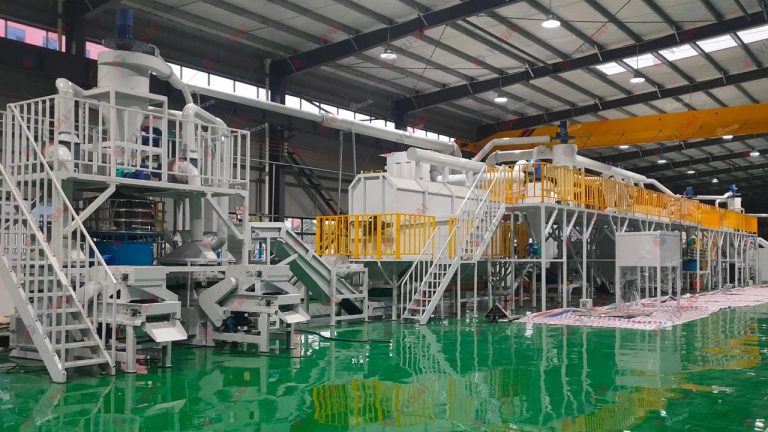
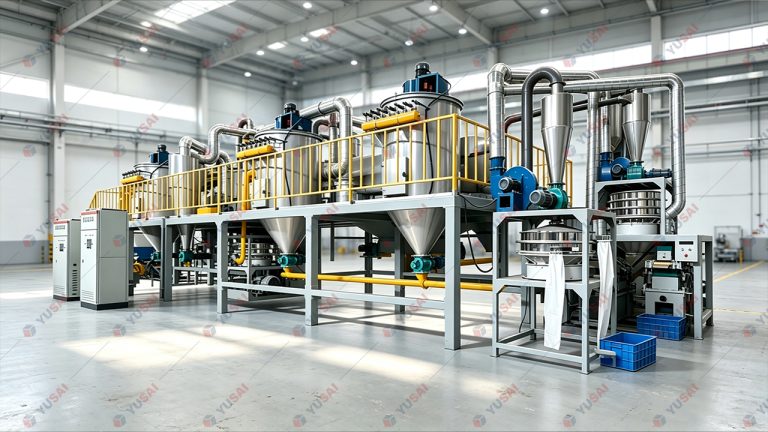
Our complete lithium battery recycling production line covers safe discharging, shredding, crushing, pyrolysis, material separation, leaching and solid-liquid filtration.
✅ Safe pretreatment to prevent thermal runaway
✅ Stable separation of copper foil, aluminum foil, separator and black mass
✅ High metal recovery rate, good economic return
✅ Integrated waste gas & wastewater treatment, meet international environmental standards
✅ Customized capacity: modular design from small pilot plant to large-scale turnkey project
✅ Full after-sales service: installation, commissioning, operator training and technical support
Conclusion
Our spent lithium battery recycling system achieves reliable separation of cathode materials and deep metal extraction, effectively lowering safety risks during battery processing. The integrated equipment improves operational safety and recovery efficiency, bringing both economic benefits and environmental protection value.
We keep upgrading our recycling equipment and combined process solutions to reduce production cost, control exhaust pollution, and promote integrated, industrialized lithium battery recycling plants worldwide. If you plan to build a lithium battery recycling project, contact our engineering team for process layout and quotation.