Driven by global carbon neutrality goals, resource scarcity and tightening cross-border environmental regulations, power battery recycling has grown into a stable, trillion-dollar global industry in 2026–2027. The era of unregulated manual dismantling is over worldwide. All major markets are shifting toward mechanized pretreatment, standardized traceability and eco-friendly processing, creating huge low-risk business opportunities for overseas small and medium investors. This article condenses global industry trends, regional compliance rules, feasible entry models and professional equipment solutions for overseas entrepreneurs.
1. Global Battery Recycling Market & Policy Trend
Mass-scale new energy vehicles and energy storage batteries deployed after 2018 are now reaching their 5–8 year service life, pushing the global retired battery volume into a sustained peak from 2026. The global lithium battery recycling market will reach USD 5–8 billion in 2026, with a 20%+ annual growth rate, and is projected to exceed USD 30 billion by 2033.
Retired ternary and LFP batteries contain recyclable lithium, cobalt, nickel and aluminum resources. Against global mineral shortages and volatile metal prices, battery recycling has become an indispensable part of the global circular economy.
Major regions have issued strict unified compliance rules:
EU: Mandatory recycling rate targets (50% lithium in 2027, 80% in 2031; 90%+ for cobalt, nickel and copper). Full battery traceability and standardized pretreatment records are legally required.
North America: Bans informal dismantling and open burning. All recycling projects must adopt enclosed mechanized processing and standardized emission treatment.
Asia-Pacific & Emerging Markets: Booming new energy penetration drives fast-growing battery retirement, while standardized local pretreatment capacity remains severely insufficient.
Globally, mechanized, safe and traceable pretreatment has become the only compliant entry threshold.
2. Overseas Industry Core Pain Points
Most overseas regional markets face identical bottlenecks, limiting profitability and compliance development:
1. Low technical efficiency: Reliance on manual sorting leads to low-purity recycled materials and low market premiums.
2. Compliance risks: Informal dismantling and open storage fail local environmental and safety audits, causing shutdown risks.
3. Unbalanced investment: Heavy-asset smelting has high risks, while pure trading brings thin and unstable profits.
4. Potential safety hazards: Unprofessional processing lacks explosion-proof and dust removal systems, easily triggering battery fires.
3. Three Low-Risk Compliant Entry Modes for Overseas Investors
3.1 Resource Brokerage & Cross-Border Matching (Zero Threshold)
Collect retired battery resources from local garages, scrap yards and energy storage stations, and match supplies with qualified international smelting enterprises. No equipment investment, no inventory risk. Ideal for beginners to accumulate local industry resources with thin but stable commission profits.
3.2 Local Mechanized Pretreatment Station (Core Profitable Model)
Build a standardized workshop with professional recycling equipment to complete battery safe discharge, disassembly, mechanical crushing and copper-aluminum-black powder separation. Sell high-purity recycled materials to qualified factories for value-added profits, or undertake local OEM processing services. This model featureshigh compliance, regional monopoly advantages and stable long-term returns, avoiding metal price fluctuation risks of pure trading.
3.3 Third-Party Professional Processing Service (Steady Cash Flow)
Operate pretreatment production lines to provide paid processing services for local recyclers, relying entirely on tonnage processing fees without active stocking. It features low market risk, high equipment utilization and stable cash flow, suitable for areas with concentrated battery resources.
4. Key Equipment Procurement & Operation Avoidance Tips
Most overseas project failures stem from improper equipment selection and non-compliant operation:
1. Reject low-end simple equipment without enclosed dust removal and explosion-proof devices, which cannot pass overseas official audits and cause safety hazards.
2. Avoid blind investment in large full-automatic lines. Modular medium and small production lines are more cost-effective for new entrants, matching actual local supply capacity.
3. Strictly distinguish physical pretreatment from chemical smelting. Our equipment only conducts environmentally friendly physical separation, fully compliant with global regulatory requirements.
4. Prioritize suppliers with overseas installation, commissioning and localized technical training support.
5. Our Global Adaptive Battery Pretreatment Solutions
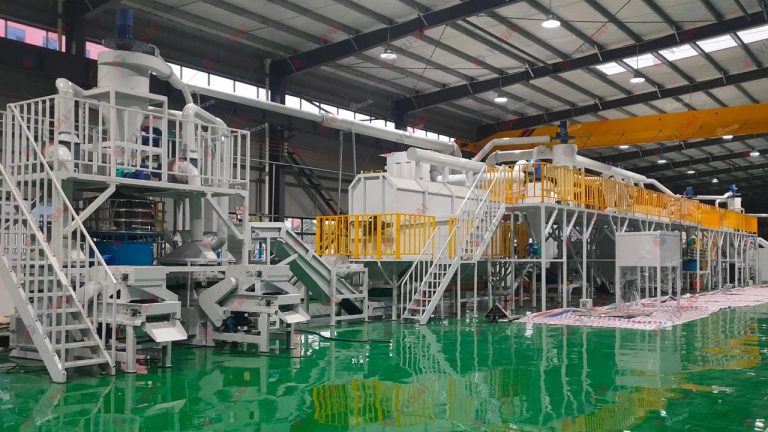
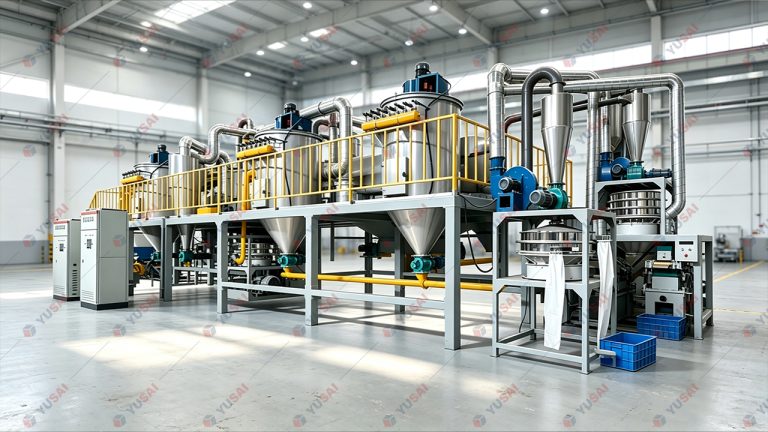
As a professional lithium battery recycling equipment manufacturer focusing on global markets, we provide international-standard modular pretreatment production lines adaptable to EU, North America, Southeast Asia and other regional compliance standards, covering small-scale trial operation and large-scale commercial production.
Core Equipment Configuration:
– Battery safe discharge equipment for processing safety
– Standard disassembly workbench for standardized workshop operation
– High-precision crushing and sorting host for high-purity material separation
– Enclosed pulse dust removal and explosion-proof system to meet global environmental & safety standards
– Flexible modular production lines for phased capacity expansion
Full-Cycle Global Services:
We provide one-stop solutions including personalized scheme customization, equipment manufacturing, overseas door-to-door installation & commissioning, operator training and lifelong after-sales maintenance. Complete qualification documents are provided to support customers’ local project filing and compliant landing.
6. Conclusion & Overseas Entry Suggestions
Global power battery recycling is a decadal deterministic long-term track driven by carbon neutrality and resource recycling policies. Informal manual workshops are being eliminated globally, while standardized mechanized pretreatment capacity is in urgent demand worldwide.
Overseas investors are recommended to start with resource matching and channel layout, then upgrade to standardized mechanized pretreatment stations after stable resource accumulation. In the current industry era dominated by compliance and technical competition, adopting international-standard professional equipment and standardized operation is the most reliable way to capture long-term global recycling dividends.